

Files
Download Full Text (1.4 MB)
Publication Date
4-30-2025
Keywords
oregon, pmg, pmg gme, oregon gme
Disciplines
Hematology | Internal Medicine
Abstract
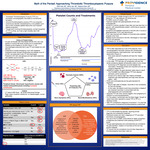
Introduction: •Thrombotic Thrombocytopenic Purpura (TTP) is a thrombotic microangiopathy that leads to microthrombi formation. •Immune thrombocytopenic purpura (ITP) is an acquired autoimmune disorder characterized by a low platelet count due to both increased platelet destruction and impaired platelet production. •Though both involving thrombocytopenia, prompt recognition of TTP is critical, as it has a high mortality rate if left untreated Case Presentation: •42-year-old female with rheumatoid arthritis (RA) who was started on tocilizumab three months prior to presentation •Platelet counts dropped to 30,000 (Figure 1). Her rheumatologist presumed that it was ITP and treated her with steroids •Presented to outside emergency room with headache. Peripheral smear showed schisto-cytes and platelet count of 40,000, but presumed it was ITP and discharged •Presents to ED with mild aphasia and right sided weakness with platelet count of 20,000 Discussion: •TTP is often described as a set of five features: fever, microangiopathic hemolytic anemia with schistocytes, thrombocytopenia, renal dysfunction, and neurologic dysfunction. •Only seven percent of patients will have the “classic pentad.” •TTP was not considered due to lack of renal involvement •In this case, TTP that was not recognized until she had stroke symptoms despite schistocytes noted on prior smear. •Anchoring of ITP diagnosis occurred despite new information, Peripheral smears are important and can be critical to diagnose TTP •ADAMTS13 assay, the gold standard, takes days to result •The PLASMIC tool differentiates TTP from atypical hemolytic uremic syndrome.2 •Scores of 6 or above (high risk) means immediate treatment with plasmapheresis and high dose steroids (table 1, left)2 •PLEX and corticosteroids are the gold standard for treatment •Due to high rates of relapse, rituximab is now considered for first line therapy4 •In this case, the patient could have prevented a relapse if she received rituximab in concomitant with the plasmapheresis and corticosteroids •Acquired TTP can have various triggers, from pregnancy to infection to immunosuppressants.1 •For this patient, tocilizumab was the likely trigger, though no cases have been reported to cause TTP or ITP in a literature review •With ITP considered a diagnosis of exclusion5, it is vital that a full workup of worsening thrombocytopenia is performed.
Specialty/Research Institute
Hematology
Specialty/Research Institute
Graduate Medical Education