

Files
Download Full Text (696 KB)
Publication Date
4-29-2026
Keywords
oregon, hood river, oaa hood river, oregon gme
Disciplines
Medical Education | Nursing | Primary Care
Abstract
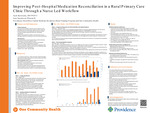
Context/background: Adverse events after hospital discharge are common and represent a major patient safety concern. Approximately 1 in 5 patients experience a safety event after discharge, and 39% of these events are adverse drug events (ADEs), with 26% considered preventable. Medication discrepancies during transitions of care contribute significantly to these events, with an estimated 40% of medication errors resulting from inadequate medication reconciliation. Rural primary care clinics face additional challenges, including limited communication between inpatient and outpatient systems and inconsistent reconciliation workflows. Improving medication reconciliation during the transition from hospital discharge to outpatient follow-up represents an important opportunity for family medicine practices to reduce preventable ADEs. Objective: To implement and evaluate a standardized RN-led workflow to improve medication reconciliation for patients discharged from the hospital and presenting for follow-up at One Community Health. Project goals included completion of telephone medication reconciliation for 80% of hospital follow-up patients and in-person RN medication reconciliation visits for 50% of patients identified as high risk. Methods: Quality improvement project conducted at One Community Health in Hood River, Oregon using sequential Plan-Do-Study-Act (PDSA) cycles from June 2025 to June 2026. • PDSA 1 (June–Aug 2025): Problem identification; stakeholder interviews (nursing leadership, care managers, pharmacists, administrators). Baseline: no standardized workflow or documentation for post-discharge medication reconciliation. • PDSA 2 (Aug–Sept 2025): Workflow design; development of standardized EHR dotphrase to document medication reconciliation and enable tracking. • PDSA 3 (Sept–Nov 2025): Implementation of documentation intervention. Hospital discharges (ED and inpatient) routed to a centralized follow-up pool. RN chart review and outreach calls within 48 hours; medication list review and reconciliation documented using dotphrase. • PDSA 4 (Dec 2025–Mar 2026): RN training and workflow integration. Standardized reconciliation during outreach calls and prior to follow-up visits scheduled within 7–14 days. • Next cycle: Audit outcomes, identify barriers, refine workflow to improve reconciliation rates toward target goals. • Data sources: EHR dotphrase utilization and hospital follow-up encounter chart review Results: Between September 2025 and February 2026, 462 hospital follow-up visits were identified. RN-led medication reconciliation documentation occurred in 100 encounters (21.6%). After dotphrase implementation in September, reconciliation rates increased from 1.6% in September to 13.6% in November. Following RN workflow training in December, telephone reconciliation documentation increased to 71.7% of follow-up visits that month and 54.4% in January. Further manual data analysis will be performed at the end of March and June to determine how many telephone medication reconciliations were completed and how many high risk patients had completed medication reconciliations in-person with RN prior to provider appointments. Discussion/conclusions: Medication discrepancies during care transitions are a major contributor to preventable ADEs in primary care. Implementation of a standardized RN-led medication reconciliation workflow improved the clinic’s ability to identify recently discharged patients and document reconciliation prior to follow-up visits. Early findings suggest nursing-led interventions and standardized EHR tools can strengthen transitional care processes in rural family medicine practices. Continued evaluation will assess how best to implement medication reconciliations in a team-based setting
Specialty/Research Institute
Graduate Medical Education
Specialty/Research Institute
Primary Care
Specialty/Research Institute
Nursing
Location
Hood River