

Files
Download Full Text (5.2 MB)
Publication Date
4-29-2026
Keywords
oregon; psvmc; psvmc gme; psvmc oaa
Disciplines
Medical Education
Abstract
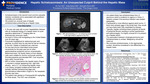
Introduction: Schistosomiasis is the second most common parasitic infection worldwide and is associated with significant morbidity and mortality. We present an unusual case of hepatic schistosomiasis presenting as a hepatic mass. Case Description: A 78-year-old male with no prior hepatobiliary disease with an incidental finding of a hepatic lesion on postoperative abdominal CT imaging after an endovascular aneurysm repair. He lived in China until immigrating to the United States over 50 years ago. Previously hospitalized for abdominal pain and diarrhea, at which time he was told he had an infection in his liver. Details of treatment are unknown. He has had chronic intermittent loose bowel movements for the past year but no other gastrointestinal symptoms and an unremarkable abdominal exam. No family history of liver disease. Labs were notable for chronic normocytic anemia, thrombocytopenia and elevated INR. Liver enzymes were within normal limits. MRI to further characterize the hepatic lesion showed a nodular appearing liver, right lobe atrophy, and a 3.7 cm enhancing hepatic mass. Liver biopsy revealed multiple portal tracts with partially calcified Schistosomal eggs and granulomatous inflammation. No Neoplastic process was seen. The patient was started on Praziquantel 60 mg/kg/ day for three doses. The CDC was contacted. Conclusion: Our patient likely has schistosomiasis from S. japonicum which is endemic to regions in China. It remains unclear if his previous infection was treated adequately. Praziquantel is most effective against adult worms. If there were already eggs in the portal tract, they would not have likely been fully eradicated by therapy. Typically, hepatic schistosomiasis presents as bands of periportal fibrosis resulting in portal hypertension and splenomegaly. It is highly unusual for it to present as a hepatic lesion. The association between cholangiocarcinoma and Schistosomiasis is unclear. Malignancy should be ruled out. We conclude schistosomiasis, in the appropriate context, should be considered in the differential of a hepatic mass.
Specialty/Research Institute
Graduate Medical Education
Specialty/Research Institute
Internal Medicine



