

Files
Download Full Text (293 KB)
Publication Date
4-29-2026
Keywords
oregon, pmg, pmg gme, pmg gme psych
Disciplines
Medical Education
Abstract
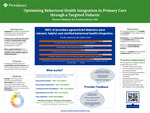
Background: The integration of behavioral health into primary care settings is an essential strategy for improving patient outcomes, increasing access to mental health services, and achieving the Triple Aim of healthcare.1, 2 To maximize this integration and bridge the gap for primary care providers (PCPs), targeted didactic training and continued education are pivotal. National surveys indicate that PCPs often report low comfort levels in managing psychological concerns due to a lack of formal training, despite the high prevalence of these issues in primary care. 3, 4 Brief didactics facilitated by embedded behavioral health psychologists offer an accessible, adaptable method for disseminating evidence-based information.1 However, the success of this model hinges on its feasibility within a busy clinical environment and its acceptability to the providers. Method: This quality improvement project implements a targeted didactic on sleep health, a topic identified as a high-priority interest in a preliminary provider survey at PMG Sherwood Family Medicine. The 10-minute didactic will be delivered during a scheduled monthly provider meeting to minimize disruption to clinical workflows. Following the presentation, providers will complete a brief satisfaction survey assessing the relevance of content and satisfaction. The researcher will qualitatively evaluate the feasibility of this delivery model and the barriers to implementation. Anticipated Results: It is anticipated that the targeted didactic will be rated moderately to highly acceptable and relevant to primary care practice. Expected outcomes include high provider satisfaction and a stated interest in future didactics tailored to clinic-specific needs. Qualitative results are expected to highlight the value of having embedded behavioral health experts to provide "on-the ground" specialty training that is relevant and applicable to patient care and barriers. Conclusion: This project plans to demonstrate that brief, evidence-based didactics are an effective method for enhancing behavioral health integration in primary care. By addressing specific provider identified interest areas, such as sleep health, embedded psychologists can foster a culture of continuous learning and interdisciplinary collaboration.5 Future iterations of this model could serve as a blueprint for expanding behavioral health competencies across diverse primary care teams, ultimately contributing to more holistic patient care and improved population health outcomes.
Area of Special Interest
Mental Health
Specialty/Research Institute
Graduate Medical Education
Specialty/Research Institute
Behavioral Health