

Files
Download Full Text (511 KB)
Publication Date
4-29-2026
Keywords
oregon, psvmc, psvmc gme, psvmc gme pharmacy; diversity
Disciplines
Infectious Disease | Medical Education
Abstract
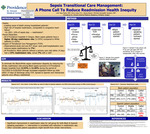
Introduction: Sepsis accounts for 52% of hospital admissions in the United States and is the leading cause of death among hospitalized patients1 . However, disparity exists among sepsis survivors with race being reported as a determinant of recovery2 . Such disparity exists in Providence Oregon 8 hospitals: Providence Black patients have higher sepsis readmission rates than White (12.93% vs 11.65%). Using modified community-based participatory research, data analysis, and stakeholder interviews, we identified one potential root cause of the disparity: Black patients being readmitted are not receiving our system's Transitional Care Management (TCM) services. We aim to eliminate the Black/White sepsis readmission disparity by reducing the 30-day readmission rate among Black sepsis survivors in 8 Providence Oregon hospitals from 12.93% to 11.65% during the period of 12/1/2023 to 6/20/2024 through increased outpatient follow-up visits within 14 days of discharge by delivering TCM intervention to those who are not eligible for one with our health system. Methods: In PDSA 1, a resident physician & nurse coordinator delivered TCM phone call intervention for Black sepsis patients who don’t qualify for the system TCM intervention due to insurance status. With these phone calls, patients are reminded to follow up with their PCP, finish their antibiotics, and given sepsis education material via either MyChart or mail delivery. If patient doesn’t have a PCP, we referred them to a federally qualified health center to get established, or to a free clinic. In PDSA 2, 1 medical student and 1 Spanish-speaking grant-funded medical assistant are added to the team to continue delivering intervention to Black sepsis patients. With Spanish-speaking patients, we helped them navigate complex phone trees of clinic that are sometimes only in English. Results: Results showed improvement in 14-day follow up rates for Black patients population (up to 38% from 28%) but not for Spanish-speaking patient population (down to 36% from 47%). Readmission rate increased significantly for both groups: readmission rates for the intervention group for Black patients decreased to 10.3% from 16%. Readmission rate for the intervened group for Spanish-speaking patients decreased to 6.8% from 8%. Conclusion: Promising results in reducing sepsis readmission rates for both Black and Spanish-speaking patients is an indication that TCM intervention may be correlated with reducing sepsis readmission health inequity.
Specialty/Research Institute
Graduate Medical Education
Specialty/Research Institute
Pharmacy
Specialty/Research Institute
Infectious Diseases