

Files
Download Full Text (805 KB)
Publication Date
4-29-2026
Keywords
oregon, psvmc, psvmc gme, psvmc oaa
Disciplines
Dermatology | Medical Education
Abstract
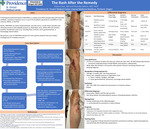
Introduction: Trimethoprim/sulfamethoxazole (TMP/SMX) is a widely prescribed and generally well-tolerated antibiotic. Cutaneous reactions occur in up to 4% of patients, including morbilliform rash, urticaria, DRESS, Stevens-Johnson syndrome, and toxic epidermal necrolysis. More rarely, TMP/SMX can trigger leukocytoclastic vasculitis (LCV), a small-vessel vasculitis characterized by neutrophilic infiltration, fibrinoid necrosis, and leukocytoclasia. LCV typically manifests as palpable purpura on dependent areas. While often skin-limited, systemic involvement may occur. We present a case of TMP/SMX-induced LCV with multi-organ features. Case description: A 53-year-old healthy male presented to urgent care with dysuria. Urine culture grew pan-sensitive E. coli, and he completed a 7-day course of TMP/ SMX with symptom resolution. Two days later, he returned with fevers, headaches, arthralgias, and dysuria. Urinalysis showed trace hematuria, and he was re-prescribed TMP/SMX for presumed prostatitis. Before restarting, his fevers improved but he developed a bilateral lower-extremity rash, prompting ED evaluation. TMP/SMX was re-prescribed a third time for possible undertreated infection. After two doses, he returned with worsening fevers, headaches, arthralgias, progressive palpable purpura, and abdominal pain. He was febrile to 39.0°C with creatinine 1.42 mg/dL (baseline 1.0), WBC 16K, Hgb 12 g/dL, platelets 127K, AST 279 U/L, ALT 298 U/L, and was admitted for concern of sepsis. Dermatology was consulted and favored TMP/SMX induced LCV. Biopsy was deferred, and corticosteroids were not initiated. Following drug discontinuation, his symptoms and renal function improved within 3 days, and purpura nearly resolved at 1 week. Discussion: LCV is rare, with an incidence of ~30 per million annually, and 10-20% of cases being drug-induced. Other causes of LCV include infections, autoimmune disorders, malignancies, and idiopathic. Symptoms typically arise within 1-3 weeks of exposure and present with palpable purpura, sometimes accompanied by fever, arthritis, renal, gastrointestinal, or hematologic involvement. The diagnosis here was supported by the classic rash, temporal association with TMP/SMX, worsening on re-exposure, and rapid improvement after withdrawal. Other TMP/SMX reactions were considered, as it can cause hepatitis, and a physiologic creatinine elevation of ~17-31% via inhibition of tubular secretion. This patient’s creatinine exceeded that range and coincided with palpable purpura, supporting LCV rather than DRESS or TEN/SJS. Drug-induced IgA vasculitis was also possible, as it can mimic LCV with multi-organ involvement. In this case, drug-induced LCV was favored, as IgA vasculitis is rarer. Management is drug withdrawal, with resolution usually within 2-3 weeks. Corticosteroids are reserved for severe or refractory disease. The prognosis is favorable with prompt withdrawal of the drug. TMP/SMX-induced LCV is a rare but important adverse reaction. Clinicians should suspect it in patients with new palpable purpura after medication exposure. Early recognition and drug withdrawal are crucial to prevent repeat exposure, unnecessary testing, and serious complications.
Specialty/Research Institute
Graduate Medical Education
Specialty/Research Institute
Internal Medicine
Specialty/Research Institute
Dermatology