

Files
Download Full Text (2.3 MB)
Publication Date
2025
Keywords
oregon, oaa 2024
Disciplines
Medical Education | Pulmonology
Abstract
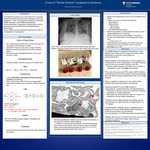
Background: • Goodpasture Syndrome is a rare autoimmune vasculitis disorder that affects the glomerular capillaries, pulmonary capillaries, or both, with glomerular basement membrane (GBM)deposition of anti-GBM autoantibodies. • Initial presentationis generally characterized byrapidly progressive glomerulonephritisand diffuse alveolar hemorrhage • Early recognition and subsequent treatment are vital fof management of Goodpasture Case Presentation: • 59 F presenting to the ED with a month-long history of hemoptysis and shortness of breath • Had been living in her car and is a vague historian. Mentions previously traveling but would not specify where • Has had frequent nosebleeds and two new pruritic wounds on legs Discussion: • Anti-GBM disease or Goodpasture Syndrome is a rare disease that involves both the lungs and kidneys, often presenting as pulmonary hemorrhage and glomerulonephritis • ANCA positivity is associated with 20-30% of cases as a “double-positive” form of Goodpasture, with MPO being the more common form of ANCA positivity over PR3Double positive disease is at a higher risk of relapse in comparison to “pure” anti-GBM body disease • This case was unusual with PR3 positive ANCA antibody and treatment with rituximab instead of cyclophosphamide since the ANCA antibody resulted earlier than the anti-GBM antibody. • Early recognition is integral as it may reverse kidney damage and prevent the need for hemodialysis • Standard treatment for anti-GBM consists of corticosteroids, cyclophos-phamide, and plasmapheresisRituximab is used as a second line treatment if disease is refractory to cyclophosphamide • Rituximab may reduce antibody titers, but it does not consistently reverse dialysis dependency • Treatment for the diffuse alveolar hemorrhage requires pulse steroids for 3 days followed by a taper dose at 1 to 1.5 mg/kg/d. • “Double positive” patients require an aggressive early treatment for the anti-GBM disease phase, followed by careful long term follow up and potential immunosuppression for ANCA associated vasculitis phase • Patients also may opt to transition to comfort care, and it is important to consider their wishes when pursuing aggressive treatment
Specialty/Research Institute
Graduate Medical Education
Specialty/Research Institute
Pulmonary Medicine