

Files
Download Full Text (2.2 MB)
Publication Date
2025
Keywords
oregon, oaa 2024, oregon gme, milwaukie
Disciplines
Immunology and Infectious Disease | Medical Education | Oncology
Abstract
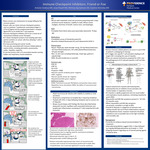
Introduction: • Many cancers use mechanisms to escape killing by the immunesystem. • Cancer cells can mimicimmune checkpoint proteins such as cytotoxic T lymphocyte–associated antigen 4 (CTLA-4) ligand and the programmed death1 receptor ligand (PD-L1) toinhibit the T-cell response. • Immune checkpoint inhibitors (ICI's) are a novel set of monoclonalantibody cancer therapies. • ICI'sblockcheckpoint proteins from binding with their partner proteins oncancer cells thus allowing T-cells to kill tumor cells. • ICIs have promising anti-cancer results. • ICIs are also associated with immune related adverse events(irAEs), including dermatitis, pneumonitis, colitis,hepatitis, nephritis. • A rare but seriousirAEisICI-associated myositis causing bulbar and respiratory muscle weakness. Case Presentation: HPI: 68 y/o with metastatic renal cell carcinoma presenting with 3 days proximal muscle weakness, inability to walk, diffuse severe myalgias, shortness of breath, hoarse voice, and dysphagia. PMH: Complete Heart block status post pacemaker placement ~8 days ago Medications • Completed course of Pembrolizumab(ICI) • Recently initiated Nivolumab (ICI) and Cabozantinib (VEGF-I) Physical exam • Neuro: Weak jaw, weak shoulder shrug, 3/5 hip flexion/extension; 4/5 knee flexion/extension,4/5 ankle plantarflexion/extension, 4/5 grip strength. • Skin: no skin rash including heliotrope,shawl sign, gottron's papules/sign • MSK: No joint tenderness or synovitis Pertinent Labs: • ESR 24 • CRP 33 • CK 5124 • Troponin >5000 • Myositis specific antibody panel: negative • ANA: negative • Muscle specific kinase ab: negative • Myasthenia/LEMs panel: negative Additional studies: EMG: Prominent muscular fibrillations and positive sharp waves Repetitive nerve stimulation (RNS): No Defect of Neuromuscular transmission Discussion Serious Immune-related adverse can occur in up to 25% of patient's undergoing ICI therapy • ICI's trigger non-specific T-cell activation leading to off-target irAE's including this case of myositis • There are several mechanisms proposed for irAE's, but the pathogenesis of ICI induced myositis is still not fully understood • Typical autoimmune myositis (dermatomyositis, polymyositis) has an indolent course and does not involve bulbar or respiratory muscles. • ICI myositis is rapidly progressive and can cause bulbar and respiratory muscle weakness, mimicking myasthenia gravis (MG). • Myocarditis and MG-like symptoms present in ~10-15% ICI myositis cases. • When myocarditis and MG-like symptoms are present mortality is as high as 60%. • Overall ICI Myositis is a diagnosis of exclusion and workup should rule out Primary inflammatory myositis and Myasthenia Gravis, however treatment should be initiated as soon as possible due to the high morbidity and mortality rate
Area of Special Interest
Cancer
Specialty/Research Institute
Graduate Medical Education
Specialty/Research Institute
Oncology