

Files
Download Full Text (1.4 MB)
Publication Date
2024
Keywords
oregon, oaa 2024, ppmc, oregon gme
Disciplines
Medical Education | Pathology
Abstract
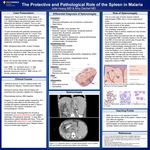
Case Presentation: • Background: There were 241 million cases of malaria globally. Compared to 2,000 cases in the U.S. Splenomegaly has previously been used to determine the severity of malaria. This is a rare case of hyper reactive malarial splenomegaly (HMS) due to chronic plasmodium ovale • 23 year-old female with gradually worsening left upper quadrant abdominal pain of 1 month. Pain sharp and stabbing in quality, no alleviating or aggravating factors. Associated with subjective early satiety and 10 Ibs weight loss, generalized weakness, shortness of breath • PMH: Schistosomiasis 2008,unclear if treated • Soc: Born in Congo and immigrated to the United States from Tanzania in 2008. Used to live near lake. No pets. No large animals. No recent travel. No alcohol or tobacco. • Exam: VS normal. Non-tender LUQ, splenomegaly 7.5 cm below the costal margin • Labs: WBC 1.6, neutrophil count 1.2, Hgb 11.4,Plt40, low reticulocyte count 1.1%, absolute reticulocyte count 47, BMP normal, LFT normal, pregnancy negative Clinical Course: • Infectious workup: O and P, malaria smear, HIV, Monospot all negative. Hepatitis panel negative. • Heme/onc workup: Bone marrow biopsy and peripheral flow cytometry negative for malignancy • Rheumatology workup: ANA negative • Imaging: CT with contrast--spleen measuring 18.9 cm causing mass effect to the left kidney and multi pleperi-splenic collaterals as seen in figure 1. Thrombus in the superior mesenteric vein. Echocardiogram--normal • Clinical Course: Anticoagulation for thrombus. Underwent laparotomy splenectomy with negative pathology. Pancytopenia resolved. 12 days af ter splenectomy, patient admitted with fever. Thick and thin smears with plasmodium ovale. Chloroquine and subsequent primaquine given. Repeat malaria smear 8 months later negative. Teaching Points: • HMS can occur in any species of malaria • Given the various roles of the spleen, malaria smear may often be negative • For patients with history of malaria exposure and splenomegaly not explained by any other cause, consider malaria and empiric treatment Discussion: Diagnosis of Lyme Disease CSF Lyme PCR negative in this case; generally has poor sensitivity • Sensitivity of antibody studies vary based on time from infection POT1 Mutation and Implications • Patient had personal history of melanoma and myxofibrosarcoma • Increased likelihood for chronic lymphocytic leukemia Development of CNS Symptoms • In neuroborreliosis, the spirochete invades the blood brain barrier gaining direct access to the CNS leading to inflammation and resulting symptoms • In secondary CNS lymphoma, metastasis of cells from the peripheral blood leads to symptoms • It is possible this patient had a peripheral lymphoma and invasion by the spirochete allowed cells to enter the CNS5-6 • It is also possible that neuroborreliosis is mimicking symptoms and diag nostic findings of a secondary CNS lymphoma2, 8 Treatment • Treated with ceftriaxone while hospitalized, transitioned to doxycycline at discharge for 21-day total course • Did not receive chemotherapy or other lymphoma directed treatment Follow-up • Repeat lumbar puncture at 4 months showed ongoing lymphocytic pleocytosis, but smaller number of cells compared to prior. Bone marrow biopsy was negative for lymphoma • Had almost total resolution of neurologic symptoms at 5 months Learning Points: • Testing characteristics matter. Learning more about Lyme antibody testing was key to diagnostics in this case • Symptoms of secondary (and even primary) CNS lymphoma and neuro borreliosis can look identical. More research needs to be done about fur ther diagnostics to help differentiate • In patients with appropriate expsoure history, it may be reasonable to con sider testing for Lyme antibodies with initial presentation of primary or secondary CNS lymphoma
Specialty/Research Institute
Graduate Medical Education
Specialty/Research Institute
Pathology & Laboratory Medicine



