

Files
Download Full Text (618 KB)
Publication Date
2024
Keywords
oregon, ppmc, oregon gme
Disciplines
Infectious Disease | Medical Education | Pharmacy and Pharmaceutical Sciences | Quality Improvement
Abstract
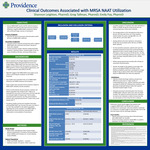
Abstract: A recent analysis by the Oregon Regional Antimicrobial Stewardship Program demonstrated that across the Oregon region, MRSA NAAT from the nares have a high negative predictive value (NPV) of 99.4%. These findings were consistent when stratified by culture site. The high NPV suggests that MRSA NAAT nasal swabs can be useful in promoting de-escalation (e.g., discontinuation) of anti-MRSA treatment. Few studies have evaluated if use of the MRSA NAAT influences anti-MRSA treatment de-escalation, and even fewer have assessed important clinical outcomes related to MRSA NAAT utilization and de-escalation. The goal of this study is to evaluate the frequency of early anti-MRSA therapy discontinuation, and clinical outcomes associated with early de-escalation of anti-MRSA therapy following MRSA NAAT results. This is a multi-center, retrospective cohort study of adult patients hospitalized at one of the eight hospitals within Providence St. Joseph Health System in Oregon between June 30th 2021 and December 24th 2022. Patients were included if they had an MRSA NAAT result during admission, received at least one dose of vancomycin for anti-MRSA treatment and were > 18 years old. Patient were excluded if they had a severe penicillin or cephalosporin allergy that precluded the use of MSSA-directed therapy or were on vancomycin for pathogens other than MRSA. The primary outcome of this study is to describe vancomycin use patterns among patients with MRSA NAAT results. The secondary objective is to assess clinical outcomes among patients who have early de-escalation of vancomycin after MRSA NAAT result compared to those with longer courses of vancomycin. Clinical outcomes include infection-related discharge readiness, treatment failure, hospital length of stay, all-causses mortality at 30 days, readmission within 30 days and acute kidney injury. We will summarize the final data set using descriptive measures such as proportions, means and standard deviation, and/or medians and interquartile ranges. We will present incidence rates for the analyses of the primary outcome of vancomycin de-escalation. Clinical outcomes between groups with early vs late/no de-escalation will be initially compared using Chi square and Fisher’s exact tests, as appropriate. To adjust for potential confounders, exploratory analyses using logistic and/or Cox proportional hazards regression will be performed. For the secondary outcomes, we will summarize the final comparative data by performing a logistic regression analysis. Results and Conclusions will be shared when the project is completed. (IRB approved). Learning Objectives: Discuss MRSA NAAT results and the clinical outcomes associated with patients who have early de-escalation following a negative MRSA NAAT compared to those who continued longer courses of vancomycin. Presentation Category: Acute internal medicine/general pharmacotherapy, Infectious Disease, Medication safety/quality improvement
Specialty/Research Institute
Graduate Medical Education
Specialty/Research Institute
Infectious Diseases
Specialty/Research Institute
Quality
Included in
Infectious Disease Commons, Medical Education Commons, Pharmacy and Pharmaceutical Sciences Commons, Quality Improvement Commons