

Files
Download Full Text (701 KB)
Publication Date
2024
Keywords
oregon, psvmc, psvmc gme, oregon gme, 2024 oaa
Disciplines
Cardiology | Medical Education | Pharmacy and Pharmaceutical Sciences | Quality Improvement
Abstract
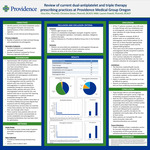
Abstract: Approximately 10% of patients with recent percutaneous intervention (PCI) have concomitant atrial fibrillation (AF) and others may have concomitant venous thromboembolism (VTE). This makes choosing the optimal antithrombotic regimen challenging. The ACC published a 2020 decision pathway to guide safe and evidence-based use of antiplatelet and anticoagulant combinations for certain patients. These situations include patients with prior AF on anticoagulation and the need for PCI, patients with new-onset AF requiring anticoagulation in a patient already on antiplatelet therapy for coronary artery disease (CAD), patients with prior VTE on anticoagulation and the need for PCI, and patients with new or recurrent VTE requiring anticoagulation in a patient already on antiplatelet therapy for CAD. Furthermore, patients with recent PCI may only be indicated for antiplatelet therapy for a specific duration, rather than life long. One intervention commonly performed by the Clinical Pharmacy Specialist (CPS) team is an assessment of a patient’s antiplatelet or anticoagulant therapy. However, these interventions commonly occur in patients who are referred to CPS through other means (eg as part of Clinical Practice Agreement (CPA) referral for a different indication). There could be many patients who are not assessed in this manner and potentially on certain antiplatelet and anticoagulation therapies/combinations that may have room for optimization. The purpose of this clinical inquiry is to identify patients prescribed antiplatelet and anticoagulant therapies and assess the appropriateness of their antithrombotic regimens based on the ACC guidance pathways. This is a retrospective chart review of patients prescribed antiplatelet and anticoagulant therapies who are followed at Providence Medical Group from January 2023 to March 2023. Reports will be generated via SlicerDicer in Epic to identify patients on antiplatelet and anticoagulant medications. Data collection points will be obtained through manual chart review. Descriptive statistics will be used to describe baseline characteristics of the study population and current prescribing practices of patients prescribed antiplatelet and anticoagulant therapies. Results and conclusions will be shared when the project is complete. (IRB exempt) Learning objectives: Identify patients prescribed antiplatelet/anticoagulant therapies and assess the appropriateness of their antithrombotic regimens. Describe current internal prescribing practices. Presentation Category: Anticoagulation; Medication safety/quality improvement; Transitions of care/medication reconciliation
Area of Special Interest
Cardiovascular (Heart)
Specialty/Research Institute
Graduate Medical Education
Specialty/Research Institute
Quality
Specialty/Research Institute
Pharmacy
Included in
Cardiology Commons, Medical Education Commons, Pharmacy and Pharmaceutical Sciences Commons, Quality Improvement Commons



