

Files
Download Full Text (2.3 MB)
Publication Date
4-29-2026
Keywords
oregon, hood river, oaa hood river, oregon gme
Disciplines
Endocrinology, Diabetes, and Metabolism | Medical Education | Nephrology | Quality Improvement
Abstract
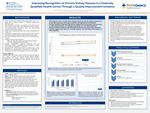
Context/background: Chronic kidney disease (CKD) affects approximately 15% of adults in the United States, yet nearly 90% of affected individuals are unaware of their diagnosis. Early identification in primary care enables interventions such as blood pressure optimization, renin –angiotensin system blockade, and kidney -protective medications that can significantly delay disease progression and postpone dialysis. Screening and diagnosis gaps disproportionately affect high -risk populations, including Latinx patients and immigrant agricultural workers commonly served in federally qualified health centers (FQHCs). National CKD screening rates among patients with diabetes or hypertension remain low, leaving many high -risk individuals unscreened for kidney disease. Improving CKD screening and recognition in primary care is critical to reducing disparities and preventing progression to advanced kidney disease. Objective: To identify system and provider barriers to CKD screening and diagnosis in a FQHC in Oregon and evaluate whether targeted workflow improvements and provider education improve CKD screening, recognition, and documentation in the electronic medical record (EMR). Methods: Quality improvement project conducted primarily in an FQHC in Hood River, Oregon using iterative Plan -Do-Study -Act (PDSA) cycles. PDSA cycle 1 established baseline CKD screening rates using EMR data among patients seen within the previous 18 months and at increased risk for CKD. Screening was defined as having both serum creatinine/eGFR and urine albumin test results in the EMR. Screening rates ranged from 53–68% across risk groups and 54% overall, substantially higher than national estimates. PDSA cycle 2 evaluated laboratory workflows affecting urine specimen collection for albuminuria testing and implemented process adjustments to improve specimen collection reliability. PDSA cycle 3 compared expected CKD prevalence in high -risk populations with documented diagnoses in the EMR, revealing lower -than- expected diagnosis rates (9.4% vs expected 25–30% among patients with hypertension and 12.3% vs expected 30–40% among patients with diabetes). PDSA cycle 4 surveyed clinicians regarding barriers to CKD diagnosis; 21 of 41 clinicians responded (12 MD/DO, 6 NP/PA, 3 residents). Areas of lowest confidence included explaining CKD diagnosis and prognosis, counseling on lifestyle modification, initiating SGLT2 inhibitors, and determining when to refer to nephrology. PDSA cycle 5 implemented a targeted educational session addressing these gaps, followed by a repeat survey (15 responses). Results: Post-intervention survey responses demonstrated increased provider comfort in several previously identified areas. The proportion of clinicians selecting the two highest Likert -scale categories increased for explaining CKD diagnosis and prognosis (71% [15/21] to 93% [14/15]), counseling patients on lifestyle modification (76% to 93%), and initiating SGLT2 inhibitors (81% to 93%). Preliminary EMR review suggests increasing CKD problem list documentation among high -risk patients following the intervention; additional pre/post analysis is ongoing. Discussion/conclusions: In this FQHC population with relatively strong CKD screening rates, underdiagnosis remained a significant care gap. A structured quality improvement approach addressing both workflow and provider barriers improved clinician confidence and may increase CKD recognition in primary care. Improving CKD documentation in the EMR supports earlier guideline -directed management and represents a feasible strategy for strengthening CKD care in community health centers.
Area of Special Interest
Kidney & Diabetes
Specialty/Research Institute
Graduate Medical Education
Specialty/Research Institute
Nephrology
Specialty/Research Institute
Quality
Location
Hood River
Included in
Endocrinology, Diabetes, and Metabolism Commons, Medical Education Commons, Nephrology Commons, Quality Improvement Commons