

Files
Download Full Text (466 KB)
Publication Date
4-29-2026
Keywords
oregon, psvmc, psvmc gme, psvmc oaa, psvmc pharmacy gme; diversity
Disciplines
Infectious Disease | Medical Education
Abstract
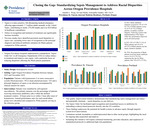
Introduction: Sepsis is a time-sensitive, life-threatening medical emergency affecting approximately 1.7 million adults annually in the United States, contributing to nearly 270,000 deaths and over $24 billion in healthcare expenditures. Delays in recognition and initiation of treatment can significantly increase mortality. Previous studies have identified persistent racial disparities in sepsis care, including lower rates of recognition as the principal diagnosis and delayed antibiotic initiation for Black patients compared with White patients. In alignment with Providence’s mission to provide compassionate, equitable care, Oregon Providence hospitals implemented a standardized “Sepsis Order Set” in all Emergency Departments (ED) to reduce treatment delays and improve care equity, with a particular focus on reducing disparities affecting the Black patient population. Methods: A retrospective review was conducted using ED encounter data from eight Oregon Providence hospitals between January 2022 and November 2024. Eligible encounters included patients with a principal diagnosis of sepsis or an infection accompanied by clinical concern for sepsis. Patients were stratified by self reported race/ethnicity. The primary measure was the percentage of patients receiving intravenous (IV) antibiotics within the defined timely treatment window: 24 hours prior to or within 1 hour after onset of hypotension. Annual performance rates for each racial/ethnic group were calculated and compared, with White patients serving as the reference group. Results: In 2022, timely antibiotic initiation occurred in 63.2% of White patients versus 45.7% of Black patients, revealing a marked disparity. Following system wide implementation of the Sepsis Order Set, performance improved across all racial groups. In 2023, 71.1% of White patients and 69.2% of Black patients met the timely initiation standard. By 2024, the proportion of Black patients receiving timely antibiotics rose to 76.2%, surpassing the rate for White patients, 73.9%. Discussion: This quality improvement initiative demonstrates that standardizing sepsis management can reduce—and potentially eliminate—racial disparities in care delivery. The Sepsis Order Set facilitated rapid recognition and streamlined delivery of antibiotics by embedding evidence-based protocols directly into the ED workflow. These findings underscore the potential for health systems to advance equity through targeted, system-level interventions. Limitations include incomplete or underrepresented data for Latinx and “Other” racial groups, highlighting the need for ongoing data quality improvement and further analysis. Sustaining these gains will require continued monitoring, provider education, and expansion of standardized protocols to additional high-risk populations.
Specialty/Research Institute
Graduate Medical Education
Specialty/Research Institute
Pharmacy
Specialty/Research Institute
Infectious Diseases
Additional Details
2026 National American College of Physicians Poster Finalist, Quality Improvement Category 2025 Oregon American College of Physicians Poster Finalist; Portland, OR, Quality Improvement Category



