

Files
Download Full Text (401 KB)
Publication Date
4-29-2026
Keywords
oregon, ppmc, ppmc gme
Disciplines
Medical Education
Abstract
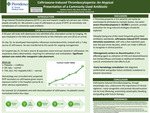
INTRODUCTION: Drug-induced thrombocytopenia (DITP) is rare and impacts roughly ten persons per million people annually (1). Over one-hundred medications have been identified as possible offenders, with immune response occurring within one to two weeks of drug exposure (2). Here we present a case of ceftriaxone as cause of DITP, an extremely rare complication of a commonly used antibiotic. CASE PRESENTATION: A fifty-year-old male with diabetes and depression initially presented after attempted suicide by hanging. He was intubated in the field and admitted directly to the intensive care unit (ICU). He remained in the ICU due to persistent encephalopathy which was confounded by polysubstance withdrawal and brain anoxia. His course was complicated by Haemophilus influenzae tracheobronchitis which was treated with a seven-day course of ceftriaxone. This was completed on day sixteen of his hospital course. He was eventually extubated and transferred to the hospitalist service. On hospital day twenty-five, he suffered a seizure and suspected aspiration event, and again ceftriaxone was administered to cover for potential aspiration pneumonia. He became more tachypneic, lethargic, and febrile so was transferred back to the ICU and reintubated. Epistaxis was noted after nasogastric tube placement. The following morning, his laboratory studies revealed a platelet count of< 2,000/uL. His heparin-induced thrombocytopenia (HIT) "4T" score suggested a low probability of HIT and additional studies ruled out disseminated intravascular coagulation; TSH, B12, HIV, Hepatitis C, and Hepatitis B were all negative as well. Hematology was consulted who felt this was most consistent with DITP due to ceftriaxone given recent exposure earlier in his hospital course. He received three units of platelets and with discontinuation of ceftriaxone, his platelet counts normalized within four days. DISCUSSION: Thrombocytopenia occurs frequently in patients admitted to the intensive care unit and is often attributed to sepsis, critical illness, and bone marrow suppression. However, a platelet count< 20,000/uL should raise suspicion for a more sinister process. Despite being one of the most used antibiotics, ceftriaxone is rarely the culprit of DITP, with only a handful of case reports identified in the literature over the past thirty years. Our case emphasizes the importance of discontinuation of the offending agent (i.e ceftriaxone) with as-needed platelet transfusions to avoid bleeding complications. Contrary to previous case reports, utilization of intravenous immunoglobulin and dexamethasone, which has only shown to be beneficial in case reports of DITP and primary ITP respectively, is unnecessary and can lead to additional healthcare costs and unintentional side effects (3,4). We also demonstrated benefits of early hematology consultation, which supported the management approach and helped confirm the DITP diagnosis, particularly emphasizing the avoidance of ceftriaxone in the future to prevent a potentially fatal recurrence. CONCLUSIONS: Thrombocytopenia is a commonly encountered diagnosis; however, ceftriaxone-induced thrombocytopenia is extremely rare. DITP should be on the differential diagnosis especially when platelet counts drop below 20,000/uL. When suspected, offending medications should be promptly discontinued to avoid serious, life-threatening bleeding complications.
Specialty/Research Institute
Graduate Medical Education
Specialty/Research Institute
Internal Medicine