

Files
Download Full Text (593 KB)
Publication Date
2024
Keywords
oregon, oaa 2024, oregon gme, php, beaverton
Disciplines
Medical Education | Pharmacy and Pharmaceutical Sciences | Population Health
Abstract
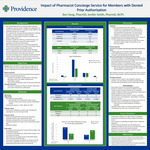
Abstract: Prior authorization (PA) is an evidence-based utilization management process used by managed care organizations to ensure prescribed products or services are safe, effective, and medically necessary for coverage.2 While PA is important for assessing clinically appropriate medication utilization, however, denials can lead to patient dissatisfaction, administrative burden for providers, and delays in patient care.1,2,3 Recent studies on the effect of PA received mixed results. One study illustrated that in an American Medical Association survey about PA, 91% of physicians reported that patients requiring care experienced care delays, and 75% of patients abandoned their treatments because of obstacles associated with the PA process.4 However, another study noted that PA helped curb the opioid epidemic by requiring submission of appropriate diagnoses or attestation from multiple prescribers for duplicative opioid therapy.1 Providence Health Plan (PHP) currently has a subset of high-volume PA requests for non-formulary medications, with most of the determinations resulting in denials. With denials, PHP sends denial explanation letters to both providers and patients, including reasons for denial and formulary alternatives that would be covered. In addition, PHP has a service, Rx Saving Solutions (RxSS), that can help patients identify cost-effective formulary alternatives. However, the usage of this service is limited depending on patients’ knowledge of technology. The purpose of this project is to assess the effect of a pharmacist concierge service for PA denials, which provides telephonic education to patients regarding formulary alternatives and RxSS utilization. This project identified Commercial and Medicare patients with PA denial for a non-formulary inhaler in 2024 using PHP’s internal PA review system, health plan eligibility information, and claims history from January 2024 through April 2024. Patients were excluded if they had a paid claim for formulary medication before a PA denial. This pilot project consists of patients who were separated into two comparator groups in two separate timeframes: 1) patients not receiving concierge service (standard denial) in January 2024; 2) patients receiving concierge service within five days of the denial throughout each week in March 2024. The primary outcomes are 1) time to first paid pharmacy claim for formulary alternative; 2) proportion of patients with paid claim for formulary alternatives within two weeks of denied PA request. The secondary outcome is the proportion of Medicare patients enrolled in RxSS within one month of denied PA. Outcomes will be compared between the two groups. Results may guide future concierge service for the improvement of adherence and health outcomes. Results and conclusions will be shared when the project is completed. (IRB exempt) Learning Objectives: Describe the effectiveness of a concierge service in addition to the standard denial process of a prior authorization Presentation Category: Managed care; clinical services development; formulary management
Specialty/Research Institute
Graduate Medical Education
Specialty/Research Institute
Pharmacy
Specialty/Research Institute
Population Health
Included in
Medical Education Commons, Pharmacy and Pharmaceutical Sciences Commons, Population Health Commons