

Files
Download Full Text (7.1 MB)
Publication Date
2024
Keywords
oregon, ppmc, onregon gme, diversity
Disciplines
Infectious Disease | Medical Education | Population Health
Abstract
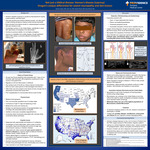
Background: Hansen’s disease (leprosy) is caused by a gram-positive, acid-fast bacilli called Mycobacterium leprae. It is very slow growing and has an indolent disease process. The disease is more prevalent in underdeveloped countries with poor access to care including Brazil, India, sub-Saharan Africa, and the Pacific Islands including Micronesia and the Philippines. However, it is becoming in creasingly common in the United States, specifically in areas with high levels of immigration from Micronesia. Case: Our patient was a 35-year-old Micronesian man who presented with 7 days of non-traumatic right hand pain with progressive swelling. He migrated to US from Micronesia in childhood and worked most of his life as a factory laborer. He often finds cuts and scrapes to his hands at home, though has no awareness of events that cause them. He does have a PMHx of prior hospitalization for burns/ scalds that he could not feel. His exam was pertinent for bilateral hand gangrene, prior loss of multiple digits, and multiple patches of neuropathy over his arms/ legs. He was diagnosed with osteomyelitis of the hand and started on appropriate IV antibiotics. However, the constellation of hand deformities, patchy areas of severe neuropathy, facial nerve findings and country of origin was concerning for leprosy. He was diagnosed over video consult with Hansen’s disease by a leprosy expert at the National Hansen’s Disease Center in Baton Rouge, LA. However the patient declined treatment and was lost to follow-up. Discussion: Hansen’s disease is largely a clinical diagnosis that has classic physical exam findings. There are nearly 250,000 new cases yearly in endemic regions, of which Micronesia is one. Interestingly, Micronesia is a part of the Compact of Free Association of the United States meaning that Micronesians can come/go to the U.S. at any time. Due to environmental and economic reasons, many Micronesians continue to migrate to the U.S. In fact, the Willamette Valley has one of the highest populations of Micronesians outside of Micronesia. There remains a lot of stigma surrounding this diagnosis related to prior perceptions that leprosy was highly communicable and untreatable. We now know this is not true, yet the stigma persists, and patients continue to suffer isolation, discrimination and hesitancy to see doctors. Conclusion: Hansen’s disease (leprosy) is rare, but it is here in Portland and the PNW, largely because of Micronesian migration patterns. Leprosy is a clinical diagnosis; endemic area + classic symptoms of hypopigmentation, patchy neuropathy and thickened nerves. There are Hansen’s Centers that can aid in diagnosis and guide treatment. Understanding stigma and correcting misinformation about futility of treatment and communicability may help overcome resistance to seeking care.
Specialty/Research Institute
Graduate Medical Education
Specialty/Research Institute
Infectious Diseases