

Files
Download Full Text (2.4 MB)
Publication Date
2025
Keywords
oregon, gme, oregon gme, ppmc
Disciplines
Infectious Disease | Medical Education
Abstract
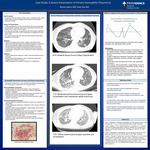
Case Presentation: Chief Complaint •55-year-old male with history of COPD, current 1 pack/day smoker, and 2-month history of hypoxic respiratory failure presents with increased shortness of breath. History of Present Illness •Initially hospitalized for a motor vehicle collision with course complicated by acute hypoxic respiratory failure due to eosinophilic pneumonia and treated with a 14-day prednisone taper. •Few days after discharge, he represented with acute hypoxic respiratory failure thought to be from a COPD exacerbation and treated with a short steroid taper. •Now, represents few days later with continued tachypnea, tachycardia, hypotension, and hypoxia.. Discussion: •Broad Differential including Pneumonia, Fat Embolism, PJP, or Parasitic Infection. However, complete workup negative and clinical presentation did not fit fat embolism or parasitic infection. •Unable to diagnose Eosinophilic Pneumonia with elevated peripheral eosinophils. However, elevation may suggest diagnosis. •Studies show high recurrence rate of 55% with eosinophilic pneumonia. •Given history, clinical presentation, image findings of ground glass opacities and peripheral eosinophilia, decision made to treat for eosinophilic pneumonia. Hypersensitivity Panel positive for Aureobasidium Pullulan, a yeast-like fungus that is common in mold. Studies show that such organisms can incite eosinophilic pneumonia – which is likely the cause of patient’s presentation Take Home Points; •Eosinophilic Pneumonia can have an acute presentation or chronic presentation. •This case illustrates a severe presentation of chronic eosinophilic pneumonia. •Clinical presentations of this disease is confirmed with eosinophils on BAL, however peripheral eosinophils are also suggestive of EP. •It is important to note a high recurrence 55% rate of eosinophilic pneumonia when previously treated and should be considered with any recent history. •Early recognition and immediate treatment with a long steroid course may save patients from developing severe respiratory failure and septic shock
Specialty/Research Institute
Graduate Medical Education
Specialty/Research Institute
Infectious Diseases