

Files
Download Full Text (1.2 MB)
Publication Date
2024
Keywords
oregon, ppmc, oregon gme
Disciplines
Infectious Disease | Medical Education
Abstract
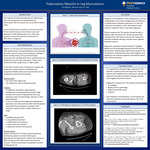
Introduction - The majority of active Mycobacterium tuberculosis cases are pulmonary, but extrapulmonary tuberculosis (TB) can account for up to 30% of active cases. Cases of tuberculosis myositis are rare and account for less than three percent of active cases and diagnosis is often delayed due to its rarity. We present a case of TB myositis and discuss the difficulties in diagnosis Case - Patient is an 82-year-old Vietnamese speaking female with hypertension and hyperlipidemia who presented for acute onset of nausea and vomiting in setting of three-month history of recurrent left lower extremity (LLE) swelling without systemic symptoms such as fever, weight loss, or night sweats. Patient reported several courses of antibiotics including sulfamethoxazole trimethoprim, clindamycin, and cephalexin in the past 3 months for presumed cellulitis with some improvement of LLE swelling but without full resolution. On physical exam, the patient had LLE tenderness with increased warmth. CT of LLE demonstrated extensive heterogeneous enhancement within the left gluteal and hamstring musculature with multiple irregular fluid collections present. The patient underwent drain placement for small fluid collections in left lateral thigh and hip. Atypical infections were considered including TB myositis and granulomatous myopathy. Work up was significant for mildly elevated CRP and a positive Quantiferon Gold test. AFB smears from abscess and sputum were negative as were bacterial cultures from the abscess. Treatment was recommended but not started until drain fluids grew Mycobacterium tuberculosis after the patient was discharged. On review of patient’s risk factors, her husband had latent TB but biggest risk was likely coming from an endemic area (Vietnam). The patient finished off 6 months of therapy with good response to treatment. Discussion – Diagnosis of TB myositis is often delayed as its clinical manifestations may mimic malignancy and infectious or inflammatory myositis syndromes. It is also not uncommon for patients presenting with TB myositis to not have systemic symptoms which may delay diagnosis. Clinical suspicion for TB myositis should be high in patients with risk factors for TB who present with swelling of the soft tissues, who do not respond to standard antibiotic therapy, and who have negative bacterial cultures. Diagnostic evaluation should include CT imaging, biopsy sent for pathology, bacteria and AFB smears, and cultures. Maintaining a high clinical suspicion for TB myositis is important because early diagnosis and treatment can improve prognosis and overall reduce risk of TB transmission.
Specialty/Research Institute
Graduate Medical Education
Specialty/Research Institute
Infectious Diseases




Comments
References: https://www.cdc.gov/tb/publications/factsheets/statistics/tbtrends.htm https://www.frontiersin.org/articles/10.3389/fneur.2019.01031/full https://academic.oup.com/rheumatology/article/42/7/836/1784434 https://synapse.koreamed.org/articles/1516080028